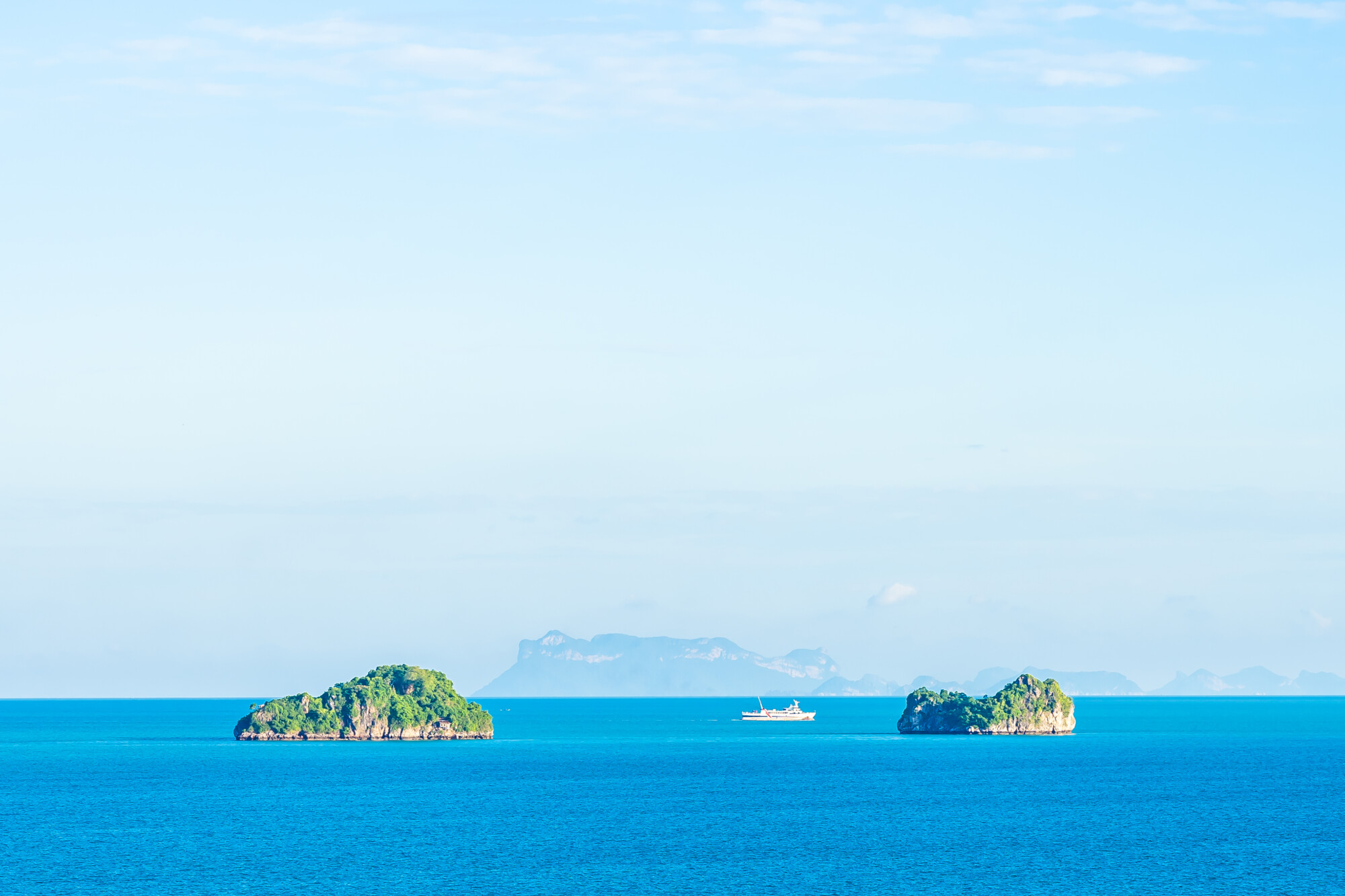
It is an article of faith among ordinary Filipinos that American troops will die with Filipino troops defending Philippine claims to the Spratly Islands in the South China Sea (SCS). Even Filipino scholars profess this view. US-Philippine military exercises simulated the recapture of an SCS island. The Philippine government believes in the “solid commitment of the United States [U.S.]” to defend Philippine sovereignty in the Spratly Islands through “interoperability” between their forces in countering China. It has allowed in Philippine territory prepositioned U.S. military equipment and personnel under an Enhanced Defense Cooperation Agreement.
Does the U.S. have an obligation to defend the Philippines in the SCS under their Mutual Defense Treaty (MDT)?
Ambiguity by Design
The recent statements of the U.S. government are ambiguous. “[A]ny attack on Philippine aircraft, vessels, or Armed Forces in the South China Sea would invoke our mutual defense treaty,” U.S. President Joe Biden said during the first U.S.-Japan-Philippines Trilateral Summit on April 11, 2024. U.S. Secretary of State Anthony Blinken declared that Americans “stand[s] by our ironclad defense commitments, including under the Mutual Defense Treaty [MDT]… [which] extends to armed attacks on the Filipino armed forces, public vessels, aircraft – including those of its coast guard-anywhere in the South China Sea.” U.S. Defense Secretary Lloyd Austin reiterated that the MDT “extends to both countries’ armed forces, public vessels, and aircraft-including those of its Coast Guard-anywhere in the Pacific, including the South China Sea.”
The scope of the territorial and maritime disputes in the South China Sea was clarified in the 2016 SCS Arbitration between the Philippines and China. According to the Arbitral Tribunal, the Spratly Islands consist of low-tide elevations not susceptible to appropriation and high-tide elevations that are not islands but rocks and entitled only to a 12-nautical-mile territorial sea. China, Malaysia, Philippines, Taiwan, and Vietnam claim these rocks, but none may treat the rocks as an offshore archipelago.
Taiwan, Vietnam, and Malaysia are American allies, although not at the level of mutual defense that the Philippines enjoys with the U.S. Taiwan recently received U.S. military funding. In 1975, upon the advice of the U.S. but “over strong objection of [Filipino] navy and marines,” the Philippines “[withdrew] from … Likas (West York)” to give way to Vietnamese forces, whose presence the U.S. preferred to the “boot-shaking prospect of having to face PRC alone at some future date over Spratlys.”
Thus, the question arises as to whether U.S. “ironclad commitment” under the MDT applies in an armed conflict involving the Philippines against China and other claimants in the SCS.
1975 U.S. Legal Interpretation of the MDT
Under Article V, the MDT covers 1) an external armed attack on a “metropolitan territory or an island territory in the Pacific” under the jurisdiction of either party; and 2) an armed attack on the “armed forces, public vessels or aircraft in the Pacific” of either party.
As early as 1975, then-U.S. Secretary of State Henry Kissinger issued a memorandum-telegram laying down the “legal interpretation of MDT commitments” that U.S. commitments “do not repeat do not apply in event of attack on Spratlys or attack on GOP [Government of the Philippine] forces stationed there.” It cited two grounds: first, the Spratly Islands are not part of Philippine territory; and second, the Philippines is not a claimant in respect of the Spratly Islands.
In its 1975 legal interpretation, the U.S. declared that it has not “recognized GOP sovereignty” over these islands. During the MDT negotiation and ratification in 1952, in the mind of the U.S. the “Spratly Islands all fall outside Philippine territory as ceded to U.S. by 1898 Treaty with Spain;” consequently, “U.S.G. [U.S. Government] maps accompanying presentation of MDT also exclude Spratlys from territories covered by MDT.”
In the same 1975 legal interpretation, the U.S. designated the 1951 negotiations on the Japanese Peace Treaty as the critical date for the purpose of identifying the claimants to the Spratly Islands. It declared that “at the time the MDT [was] signed, {Philippines] had asserted no claim to any of the Spratly Islands and had protested neither Vietnamese nor Chinese claims.” Rather, “at time of negotiation of 1951 Japanese Peace Treaty,” specifically the provision on the status of the Spratly Islands, only China and Vietnam interposed claims. Thus, even as the U.S. did not favor any of the claimants to the Spratly Islands, it did not consider the Philippines as one of them.
1979 U.S. Legal Interpretation of the MDT
Nonetheless, in 1978, the Philippines formally claimed the Spratly Islands as an offshore archipelago arguing that “while other states have laid claims to some of these areas, their claims have lapsed by abandonment and cannot prevail over that of the Philippines on legal, historical, and equitable grounds.” Still, then-U.S. Secretary of State Cyrus Vance did not declare the MDT applicable to the disputed Spratly Islands. Rather, Document 578 of American Foreign Policy Basic Documents 1977-1980 is a 1979 letter to then-Philippine Minister of Foreign Affairs Carlos Romulo, in which Vance further clarified the U.S. legal interpretation of the MDT. He declared that armed attack under the MDT refers to external armed aggression against any part of Philippine metropolitan territory as defined by the 1898 Treaty of Paris between Spain and the U.S. and the 1900 Treaty of Washington between Great Britain and the U.S. (amended in 1930), as well as island territories in the Pacific that are under Philippine jurisdiction. Moreover, “armed attack on any Philippine armed forces, public vessels or aircraft in the Pacific would not have to occur within the Philippine metropolitan territory or island territory under its jurisdiction in the Pacific in order to come within the definition of Pacific Area in Article V.” Thus, armed attack on said forces or vessels taking place in undisputed maritime areas in the South China Sea would fall within the scope of the MDT.
PART 2
I explained that in its 1975 and 1979 legal interpretations of the Mutual Defense Treaty (MDT) with the Philippines, U.S. denied any legal obligation to defend the Philippines in an armed conflict over the Spratly Islands. These legal interpretations were not revised in the 2024 statements of the U.S. government for the U.S. is even careful to limit its commitment in the SCS to situations of “armed attack” against Philippine “armed forces, public vessels, aircraft-including those of its coast guard” but not Spratly Islands being claimed or occupied by the Philippines.
The question is whether U.S. commitment was deemed expanded by reason of the SCS Arbitration.
2017 U.S. Legal Position on the SCS Arbitral Award
Following the issuance of the SCS Arbitral Award, Taiwan deployed a naval armada “to patrol the South China Sea”. Being non-parties to the SCS arbitration, Vietnam and Malaysia are not bound by it but have been selective in their support of the Arbitral Award. For instance, Vietnam supports the Arbitral Award’s ruling that China’s nine-dash line is contrary to the convention. Yet, in its 2023 administrative map, Vietnam maintained its claim to the Spratly Islands as an archipelago or Troung Sa, thereby defying the ruling that no littoral state may claim an archipelago in the SCS.
The U.S. interpreted the Arbitral Award to mean that China “cannot lawfully assert a maritime claim … vis-a-vis the Philippines in areas that the Tribunal found to be in the Philippines’ EEZ or on its continental shelf.” China “has no lawful territorial or maritime claim to Mischief Reef or Second Thomas Shoal, both of which fall fully under the Philippines’ sovereign rights and jurisdiction, nor does Beijing have any territorial or maritime claims generated from these features.”
It should be borne in mind that the Philippine EEZ and Continental Shelf (CS) is interrupted by numerous rocks with pockets of territorial sea. The SCS Arbitral Tribunal recognized that there are rocks within 200 nautical miles from the Philippines coasts that are occupied by China, Taiwan, Vietnam, and Malaysia and that each rock, including Itu Aba occupied by Taiwan, has a 12-nautical mile territorial sea. As the Arbitral Tribunal had no jurisdiction to resolve the territorial status of these pockets of territorial sea vis-à-vis the maritime entitlement of the Philippines, it merely declared that the Philippine EEZ and CS is “beyond 12 M from any high-tide feature within the South China Sea.” This definition of the Philippine EEZ and CS further confines the scope of application of the MDT.
Thus, an armed attack by China against the Philippines would engage the U.S. commitment under the MDT if directed at Philippine armed forces, public vessels, and aircraft, including coastguard vessels, while the latter are within the Philippine EEZ but not when they are on the disputed Spratly Islands or their respective territorial seas. However, the question remains whether a similar armed attack by Taiwan, Vietnam, or Malaysia would also engage U.S. commitment. Through their new coast guard laws, China, Taiwan and Vietnam authorize use of lethal force against perceived threats to their territorial and maritime claims in the SCS.
The Second Thomas Shoal where the Philippine Navy’s 80-year-old BRP Sierra Madre has been intentionally beached is a low tide elevation found in the Philippines EEZ. Nevertheless, BRP Sierra Madre, though derelict, is a Philippine naval vessel and the troops stationed therein are covered by the MDT. Philippine coastguard vessels and personnel on rotation and resupply missions in Second Thomas Shoal have been harassed and attacked by China by means of vessel-ramming and firing of laser beams and water cannons. These drew U.S. condemnation but not military force in defense of the Philippines.
Near Reed Bank, the Philippines converted decommissioned oil and gas platforms into naval outposts. Philippine forces and vessels in these installations would come within the coverage of the MDT, especially as Reed Bank is recognized by the U.S. as part of Philippine CS.
Another hotspot between the Philippines and China is Scarborough Shoal. China presently controls access to this shoal. The Arbitral Award recognized that fishing in the territorial waters of the shoal is a right common to Filipino, Chinese and Vietnamese fishermen. Consequently, any fishing dispute between the Philippines and China in the shoal would be territorial in nature. The 1975 U.S. legal interpretation excludes such dispute from the scope of American obligation to defend the Philippines. The U.S. interpretation of the Arbitral Award did not revise this legal interpretation of the MDT.
A Nothing-Burger
As if by design, the Kissinger memo-followed by the Vance letter and current U.S. pronouncements-had created a fine ambiguity concerning the scope of obligations under the MDT. This ambiguity is one liable to enthusiastic (mis)interpretations by Filipino leaders, much to American advantage and quite possibly, to deep Filipino sorrows.
American obligation to defend the Philippines in the South China Sea is a nothing-burger. The question for Filipinos is whether they would risk upgrading this obligation under a renegotiated MDT given the certainty of a conflict between U.S. and China for dominance in the region. The question for Americans is whether they would be willing to foot the bill with their lives on tiny rocks thousands of miles across the Pacific.
Author
Melissa Loja is a Postdoctoral Fellow at University of Copenhagen. She is the author of “International Agreements between Non-state Actors as a Source of International Law” (Hart, 2022) and various journal articles in the European Journal of International Law, the International Journal of Constitutional Law and the Leiden Journal of International Law.
Romel Regalado Bagares is a professorial lecturer in international law in three Manila-based law schools and the Philippine Judicial Academy. His latest publication (with José Duke Bagulaya), ‘Hidden in Plain Sight: International Law and Marxist Praxis in the Life and Works of Merlin M. Magallona’ was published in the Asian Journal of International Law.