PART 1
On 3 June 2023, about 30 pilgrims gathered at a pagoda in Wat Yuan Cemetery near the town of Kanchanaburi, Thailand. These pilgrims, mostly Malaysian Tamils, were there to witness the opening of the first ever monument to Tamil and other Asian forced labourers drafted by the Japanese army during World War II to work on the infamous Thai-Burma Death Railway. Beneath the pagoda is a mass grave holding the remains of Tamil forced labourers who died building the railway, which ran through Kanchanaburi. The pilgrimage was led by P. Chandrasekaran, president of the Death Railway Interest Group (“DRIG”), a Malaysian activist group that seeks to memorialise the stories of Tamil forced labourers on the Death Railway. It was on DRIG’s initiative that the monument in Kanchanaburi was brought to fruition.
Under international law, victims of gross human rights violations are entitled to reparations. This right is set out in Principles 2 and 3 of the United Nations Basic Principles and Guidelines on the Right to a Remedy and Reparation for Victims of Gross Violations of International Human Rights Law and Serious Violations of International Humanitarian Law (“Basic Principles and Guidelines”). But what happens when reparations are denied for decades?
This is the question that Chandrasekaran and DRIG aim to address for Tamil forced labourers on the Death Railway—who never received any reparations—and their descendants. This article outlines DRIG’s work in building the monument, and the perspectives it offers for transitional justice.
The Forgotten Tamils of the Death Railway
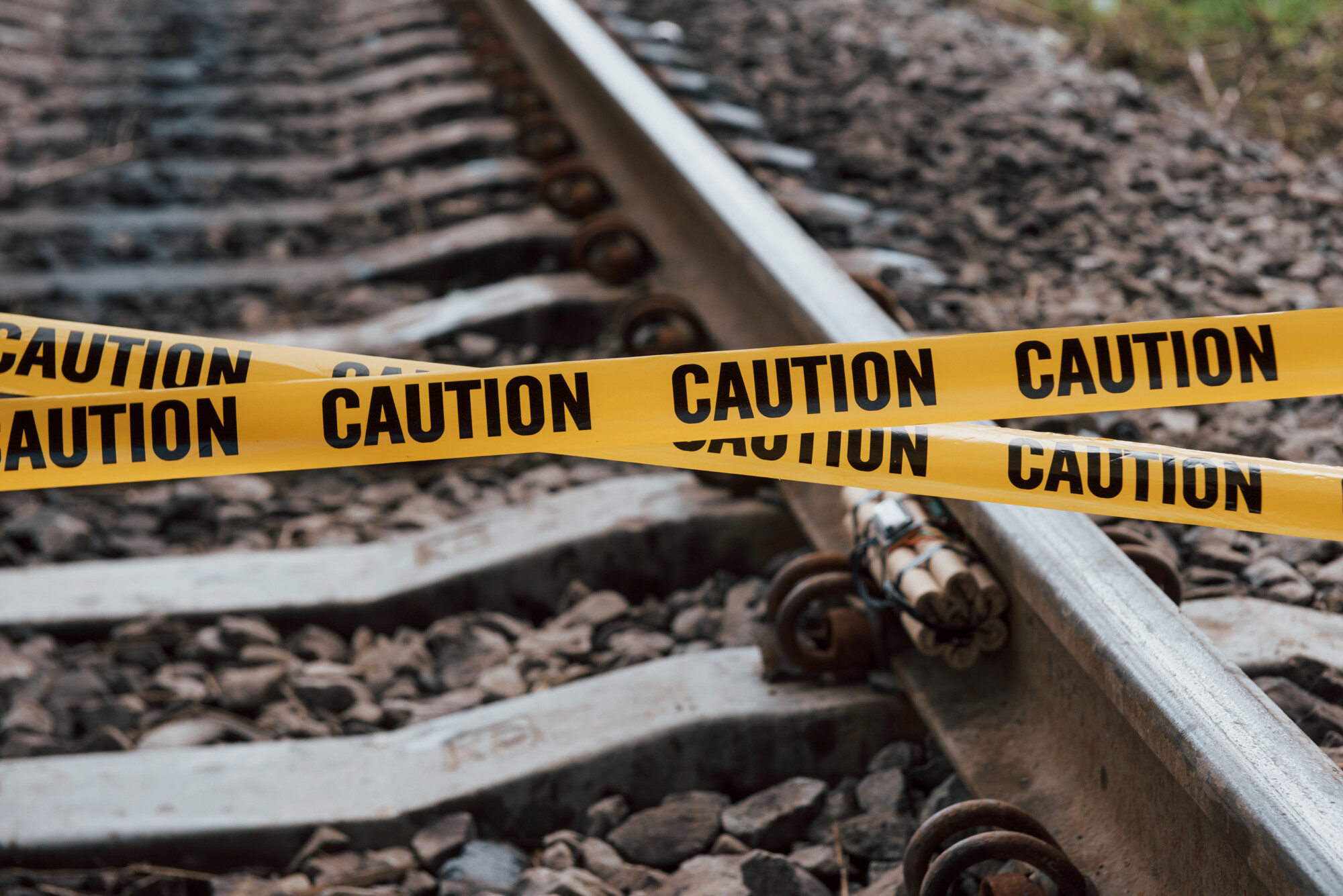
The Death Railway was built from 1942 to 1943 by civilian labourers and Allied prisoners of war (“POWs”) conscripted by the Japanese army, and was meant to supply Japanese troops for an invasion of India. The railway spanned 415km between Ban Pong, Thailand and Thanbyuzayat, Myanmar. It earned its name from the labourers’ notoriously high death rate, caused by poor working conditions and the Japanese army’s human rights abuses. The stories of the 60,000 POWs on the railway have been extensively memorialised, famously in the 1957 Academy Award-winning film The Bridge on the River Kwai. Many POWs have also received compensation from their home countries.
The same, however, cannot be said for the approximately 270,000 Asian civilian forced labourers. During my interview with Chandrasekaran, he mentioned that not less than 100,000 of these labourers were Malayan Tamils. Till today, the number of Tamil labourers who worked and died on the railway remains a mystery, as neither the British colonial government nor the independent Malaysian government has taken stock of Tamil lives lost.
“To make matters worse, these…were not Indians from the towns, [but] Indians [who were labourers in] estates,” said Chandrasekaran in our interview. “So when they came back from Thailand, they were sent back to their respective estates. Out of sight, out of mind.” For families who lost breadwinners, no help was extended except to repatriate them to their native villages in India.
For the past decade, DRIG has been interviewing Death Railway survivors and recording their stories for posterity. Its decision to focus on memorialisation instead of compensation was deliberate. While many survivors and their families want compensation, their efforts—supported by other activists—always ended in disappointment. Although Malaysia had obtained from Japan a “Goodwill Grant” of RM25 million in 1967 through bilateral negotiations, there are allegations that none of the money was given to victims. Also, as the demands for compensation were led by Chinese associations, the interests of Tamil forced labourers were likely excluded.
“Over the years, these people keep dying off, and they carry their stories to the grave,” said Chandrasekaran in our interview. “Maybe we can’t get them compensation, but there’s something we can do within our capacity, and that is to make sure that these people get recognition, if not in Malaysia, at least in Thailand.”
Building the Monument
DRIG sought to build a monument to Tamil forced labourers as it was concerned that the location of those labourers’ resting places remained unknown. In 2014, Chandrasekaran learned of a pagoda in Wat Yuan Cemetery in Kanchanaburi, owned by the Buddhist Wat Thavorn Wararam temple. The pagoda bore an inscription in Chinese that read “Tomb of Ten Thousand Souls”, but did not specify whom it referred to.
Chandrasekaran found out from the temple authorities that the people buried beneath the pagoda were foreigners who worked in Thailand during the war. Using maps from Kanchanaburi’s Death Railway Museum, which showed the original burial sites of Tamil workers, Chandrasekaran deduced that the workers were probably re-buried in Wat Yuan Cemetery, which was very close to the original burial sites.
Upon his request, the temple authorities readily agreed to have the pagoda upgraded to a monument to Tamil workers. Although there was a language barrier between him and the Thai-speaking temple authorities, this was bridged by the assistance of Dr. Surin Janpian, president of the Kanchanaburi Tourist Business Association, whom Chandrasekaran met through a British resident in Kanchanaburi, Dr. Surin helped connect Chandrasekaran to necessary stakeholders by tapping on his network as a former military general.
DRIG commissioned a fresh coat of paint for the pagoda, as well as signs in English, Tamil, and Thai explaining the background of the Death Railway and the fact that many forced labourers were Tamil people who worked on Malayan plantations. In drafting the signage, Chandrasekaran consulted the Malaysian writer A. Rengasamy, who had authored a Tamil-language novel about Tamil workers on the Death Railway in 2005, titled Monument.
Initially, Chandrasekaran and Dr. Surin had differing visions for the monument. Dr. Surin had wanted it built near the Khwae Yai River, where The Bridge on the River Kwai was set, to attract visitors. “I wasn’t interested in that location for the simple reason that it was not directly linked to the Death Railway workers,” said Chandrasekaran. “Very few Asian workers died at that bridge, because it is very close to the town of Kanchanaburi.” Despite these initial differences, the monument was successfully completed in time for its inauguration.
PART 2
The Inauguration Ceremony
Most of the attendees at the inauguration ceremony were family members of the railway’s Tamil victims. A single survivor was present, namely 97-year-old Mr. Arumugam Kandasamy, who was sent to the railway at the age of 15. Many attendees, including Mr. Arumugam, travelled to the site via a 24-hour rail journey to commemorate the path taken by the workers. At the site of a workers’ camp, the attendees performed the Aathma Puja—a Hindu ritual offering prayers for the souls—with the help of a priest, who was the grandson of a victim himself.
The ceremony evoked a spectrum of responses from the attendees. “In most cases, it was an emotional moment as most of the victims have never had the final rites done,” said Chandrasekaran in our interview. For distant descendants who never knew their lost relatives, attending the ceremony was merely a matter of curiosity. But for those haunted for decades by a lingering hope for their relatives’ survival, the pagoda and ceremony served as long-awaited closure.
Mr. Arumugam, too, was pleased by the ceremony. “All your life, you were living in an isolated place in an estate, you have gone through all this, but nobody around you is interested. Now suddenly, when you came on this trip, there’re 30 other people who want to know what your story is. It’s not just these 30 co-travellers, but also the press in Thailand,” remarked Chandrasekaran in our interview. “Over the years, many people have gone to see him and promised to get compensation for him, but he has not got his compensation. Through DRIG, he has got a lot of recognition. Over the last seven, eight years, he has attended our symposium, we have honoured him there, and then we gave him a lot of exposure. His statements and his photographs appeared in the media, as a survivor.” Today, the descendants of the railway’s Tamil victims are doing much better than their forefathers. “Most of them are no longer in the plantations, they are all out holding jobs now,” said Chandrasekaran in our interview.
DRIG as an Unofficial Truth Project
In memorialising the Death Railway’s Tamil victims, DRIG is arguably an Unofficial Truth Project (“UTP”) as defined by Louis Bickford (2007). UTPs are transitional justice strategies driven by civil society organisations which aim to reveal truths about past human rights abuses in transitional societies, and which “self-consciously or coincidentally resemble official truth commissions” (Bickford 2007). They may be initiated where official truth commissions are politically unfeasible, ineffective, or compromised, and may serve to replace, prepare for, or complement official truth commissions. According to Patricia Lundy, UTPs also represent “a shift away from the top down ‘one-size-fits-all’ approach to a bottom-up model that allows ‘voices from below’ to be heard and heeded.”
Whether conducted by official truth commissions or UTPs, truth-telling is vital for ensuring accountability for past atrocities, as it “limit[s] the possibility of denial or trivialisation of victims’ experiences” (Bickford 2007). Indeed, Principle 22 of the Basic Principles and Guidelines entitles victims to, inter alia, the following forms of reparations:
- verification of facts and full and public disclosure of the truth;
- search of the bodies of those killed, and assistance in the recovery, identification and reburial of the bodies in accordance to victims’ expressed or presumed wishes or the cultural practices of their families and communities; and
- commemorations and tributes to the victims.
As an NGO formed in response to the British and Malaysian governments’ failure to secure reparations for Tamil forced labourers, DRIG may be seen as a UTP that provides victims and their families with these forms of reparations. Its ground-up initiatives are especially important for ensuring justice for victims’ descendants. As reparations have been delayed for many generations, most victims’ living descendants are no longer covered by the definition of “victim” in Principle 8, and hence may not be legally entitled to reparations under the Basic Principles and Guidelines.
DRIG’s work therefore provides a case study for transitional study research, as it shows how justice may be delivered to victims of human rights abuses after very long delays. It also sheds light on what steps marginalised communities can take to prevent the erasure of past injustices from history.
Moving forward, DRIG plans to organise yearly pilgrimages to the pagoda, as well as group trips to the pagoda upon request. In addition, it is planning several ambitious projects to publicise Tamil victims’ stories to the global audience. These include publishing a book about forced labourers like Mr. Arumugam, and producing a documentary about Tamil forced labourers on the Death Railway. “Our ultimate goal is to tell the global audience about what has happened here, that this is very much a part of World War II history, which is not recorded and not given its due recognition,” said Chandrasekaran.
Author
Ryan Ma is a third-year law student at the National University of Singapore pursuing a second degree in Liberal Arts at Yale-NUS College, with a minor in Environmental Studies. He is passionate about sustainable and inclusive development, especially in developing countries. His interests in law lie in sustainable finance (especially in climate mitigation and adaptation), ESG, and climate justice.